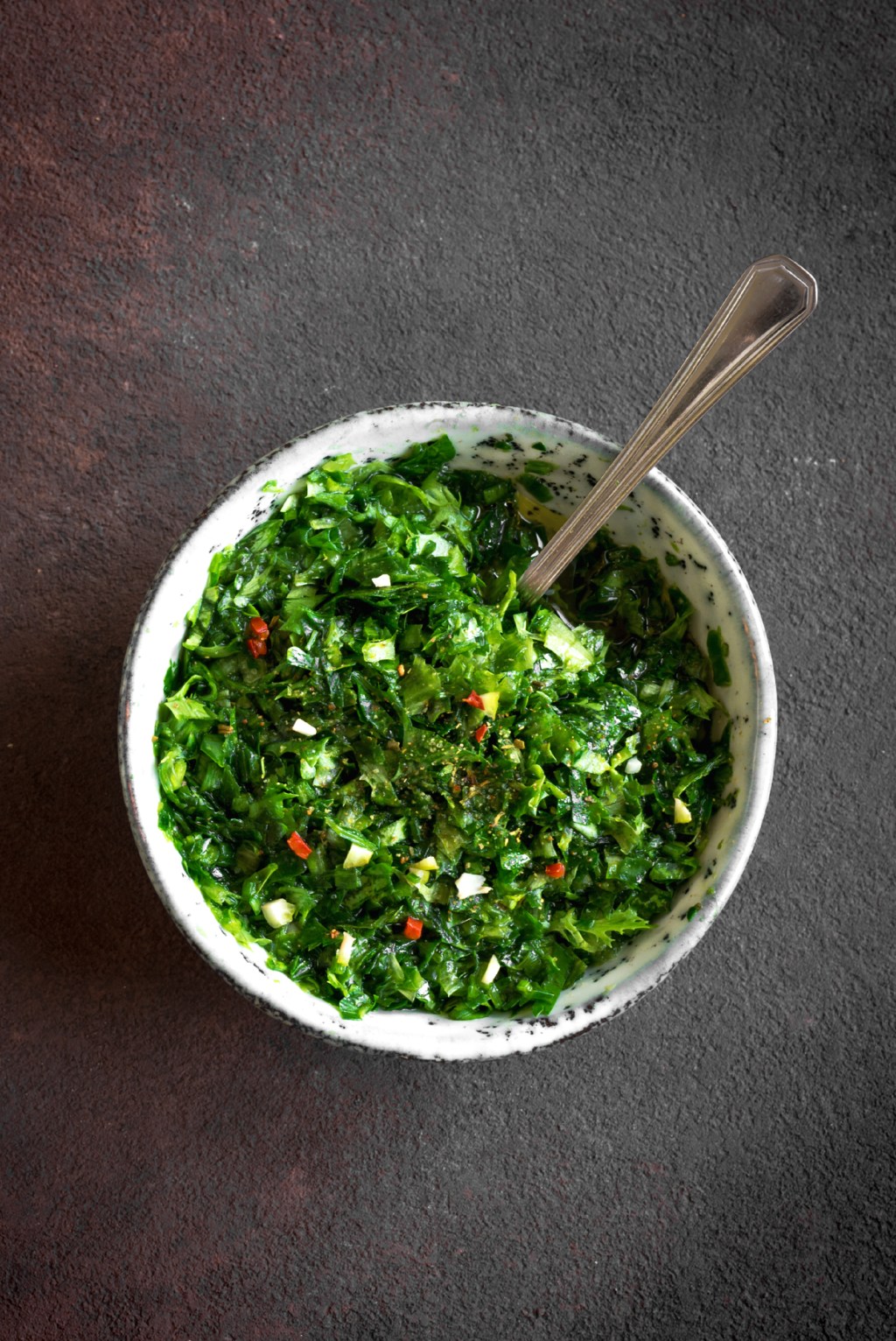
This classic sauce is bright, tangy, and packed with fresh herbs, perfect for enhancing grilled meats, especially steak.
Ingredients:
• 1 cup fresh flat-leaf parsley, finely chopped
• ¼ cup fresh oregano leaves, finely chopped (or 1 tablespoon dried oregano)
• 4 garlic cloves, finely minced
• ½ cup extra-virgin olive oil
• 2 tablespoons red wine vinegar
• 1 teaspoon red pepper flakes (adjust to taste)
• Salt to taste (about 1 teaspoon)
• Freshly ground black pepper to taste (optional)
Instructions:
1. Prepare the Herbs and Garlic:
• Finely chop the parsley and oregano, and mince the garlic. Authentic chimichurri has a slightly chunky texture, so avoid using a food processor as it can make the herbs too fine.
2. Mix Ingredients:
• In a medium bowl, combine the parsley, oregano, and garlic. Add the red pepper flakes, salt, and black pepper (if using).
3. Add the Liquids:
• Pour in the olive oil and red wine vinegar. Stir well to mix all ingredients thoroughly. Adjust the salt and red pepper flakes to taste.
4. Let the Sauce Rest:
• For the best flavor, let the chimichurri sit at room temperature for at least 30 minutes to allow the flavors to meld. You can store it in the refrigerator, but bring it to room temperature before serving for the best taste.
5. Serve:
• Serve your chimichurri with grilled meats, especially steak, or as a flavorful condiment for vegetables, bread, or seafood.
Notes
• Storage: Chimichurri can be stored in an airtight container in the refrigerator for up to a week.
• Authenticity Tip: Traditional Argentine chimichurri has a rustic, hand-chopped texture, allowing each ingredient’s flavor to shine individually rather than being blended.
Chimichurri sauce has numerous variations that add regional twists, extra herbs, spices, or other flavorful ingredients. Here are some popular and interesting versions:
1. Red Chimichurri (Chimichurri Rojo)
• This variation includes fresh or dried red peppers, such as bell pepper or paprika, which gives it a vibrant red color. Sometimes tomato paste or sun-dried tomatoes are also added for an extra layer of flavor.
• Additional Ingredients: Red bell pepper, paprika (sweet or smoked), tomato paste (optional)
2. Spicy Chimichurri
• For those who enjoy a kick, a spicy version includes extra chili peppers or hot pepper flakes. This version can be as mild or fiery as you like, depending on the type and quantity of pepper.
• Additional Ingredients: Fresh or dried chili peppers, hot pepper flakes, aji amarillo (Peruvian yellow chili, if available)
3. Cilantro Chimichurri
• This version swaps half of the parsley for cilantro, giving the sauce a bright, citrusy flavor that’s especially popular in Central and South America.
• Additional Ingredients: 1/2 cup fresh cilantro in place of some parsley
4. Basil Chimichurri
• Perfect for summer, this twist includes fresh basil along with parsley, giving the sauce an aromatic, slightly sweet flavor that pairs well with grilled vegetables and lighter meats like chicken or fish.
• Additional Ingredients: 1/2 cup fresh basil in place of some parsley
5. Mint Chimichurri
• Adding fresh mint along with parsley and oregano gives chimichurri a cooling, herbaceous flavor. This version is especially nice with lamb, fish, or as a topping for Mediterranean-inspired dishes.
• Additional Ingredients: 1/4 cup fresh mint leaves
6. Garlic Chimichurri
• For garlic lovers, this version doubles or even triples the amount of garlic, creating a pungent, bold sauce. The extra garlic can also be roasted first for a more mellow, caramelized flavor.
• Additional Ingredients: 8-10 garlic cloves (instead of 4), roasted garlic for a milder option
7. Smoky Chimichurri
• This variation uses smoked paprika or even a touch of liquid smoke for a rich, smoky flavor. It’s great for pairing with grilled meats and BBQ dishes.
• Additional Ingredients: 1 teaspoon smoked paprika, a few drops of liquid smoke (optional)
8. Lemon Chimichurri
• This citrusy version replaces vinegar with lemon juice and zest, giving the sauce a brighter, tangy profile. It’s perfect for seafood, chicken, and Mediterranean-inspired dishes.
• Additional Ingredients: Juice and zest of 1-2 lemons instead of vinegar
9. Creamy Chimichurri
• Blending chimichurri with a bit of Greek yogurt or sour cream creates a creamy, tangy sauce. This variation is delicious as a dip, sandwich spread, or salad dressing.
• Additional Ingredients: 1/4 cup Greek yogurt or sour cream
10. Pine Nut Chimichurri
• Inspired by Italian flavors, this twist includes finely chopped pine nuts, which add richness and texture. It’s especially good on grilled veggies or as a pasta topping.
• Additional Ingredients: 1/4 cup finely chopped pine nuts
Tips for Experimenting with Chimichurri Variations
• Herbs: Chimichurri is flexible, so feel free to experiment with other fresh herbs, like dill, thyme, or tarragon, based on your flavor preferences.
• Acidity: While red wine vinegar is traditional, you can try different vinegars (like apple cider or sherry vinegar) or citrus juices (lemon or lime) for different levels of tanginess.
• Additions: Some versions add a splash of white wine, a pinch of cumin, or even grated cheese (like Parmesan) to enhance depth and richness.
Each variation offers its unique flavor, while the essence of chimichurri—the bold, herby, garlicky character—remains intact. Enjoy experimenting to find your favorite twist!



 Sauces and Dips
Leave a comment